Pages

Showing posts with label war crimes. Show all posts

Monday, March 11, 2013

Bodies found in Aleppo's 'river of martyrs' - Middle East - Al Jazeera English

 
Most bodies found so far floated down River Quwaiq to opposition-held Bustan al-Qasr neighbourhood [Al Jazeera]

Syrian opposition campaigners have said at least 20 bodies of young men shot by security forces were found in a small waterway running through the contested city of Aleppo......... 
FULL ARTICLE: Bodies found in Aleppo's 'river of martyrs' - Middle East - Al Jazeera English

Thursday, February 28, 2013

HUMAN RIGHTS WATCH PRESS RELEASE: Syria: Unlawful Missile Attacks Kill More Than 140


Recent Escalation of Tactic Threatens Civilians
February 26, 2013
(Kilis) – The Syrian government launched at least four ballistic missiles that struck populated areas in the city of Aleppo and a town in Aleppo governorate during the week of February 17, 2013. The attacks killed more than 141 people, including 71 children, and caused immense physical destruction.

The extent of the damage from a single strike, the lack of aircraft in the area at the time, and reports of ballistic missiles being launched from a military base near Damascus overwhelmingly suggest that government forces struck these areas with ballistic missiles. Human Rights Watch visited the four attack sites, all in residential neighborhoods. Human Rights Watch found no signs of any military targets in the vicinity of any of the four sites, which would mean that the attacks were unlawful.

“I have visited many attack sites in Syria, but have never seen such destruction,” said Ole Solvang, emergencies researcher at Human Rights Watch, who visited the sites. “Just when you think things can’t get any worse, the Syrian government finds ways to escalate its killing tactics.”

Human Rights Watch compiled a list of those killed from cemetery burial records, interviews with relatives and neighbors, and information from the Aleppo media center and the Violations Documentation Center, a network of local activists.

Around midnight on February 18 a missile struck the Jabal Badro neighborhood in Aleppo, killing at least 47 people, including 23 children. According to local residents, government forces started shelling the attack site about 20 minutes after the missile struck, wounding several people. Just before 6 p.m. on February 22, a missile struck the Tariq al-Bab neighborhood in the eastern part of Aleppo, killing at least 13 people, including eight children. Just minutes later, a missile struck the Ard al-Hamra neighborhood close by, killing at least 78 people, including 38 children......

FULL PRESS RELEASE HERE: Syria: Unlawful Missile Attacks Kill More Than 140 | Human Rights Watch

Tuesday, June 19, 2012

Syria: Reports of helicopter shipments underscore need for arms embargo | Amnesty International

Helicopter seen firing over Taftanaz, north-east of Idlib City, on 3 April 2012Helicopter seen firing over Taftanaz, north-east of Idlib City, on 3 April 2012
© Private

“Anyone supplying attack helicopters – or maintaining, repairing or upgrading them – for the Syrian government displays a wanton disregard for humanity”
Donatella Rovera, Amnesty International’s Senior Crisis Adviser
Tue, 19/06/2012
The increased use of helicopters by the Syrian army is putting civilians at even greater risk and further strengthens the case for an international arms embargo, Amnesty International said today amid reports that a Russian ship carrying strike helicopters to Syria had been stopped in the North Sea.

The UK Foreign Office said on Tuesday that it was “aware of a ship carrying a consignment of refurbished Russian-made attack helicopters heading to Syria”. The ship is now reported to be returning to Russia after its insurance was revoked.

"As confrontations between the Syrian army and armed opposition groups have intensified in recent weeks, the Syrian army seems to be resorting ever more to the use of combat helicopters, which risks increasing civilian casualties,” said Donatella Rovera, Amnesty International’s Senior Crisis Adviser, who has just returned from spending several weeks in Syria, where she met victims of indiscriminate fire from helicopters in the north of the country.

“In this context, anyone supplying attack helicopters – or maintaining, repairing or upgrading them – for the Syrian government displays a wanton disregard for humanity.”

The latest shipment underscores the need for UN members to agree an effective Arms Trade Treaty – when final negotiations begin in a few weeks – that will protect human rights and stop arms transfers where there is a substantial risk they are likely to be used for serious human rights violations or international crimes.


Wednesday, May 30, 2012

Former Liberian leader Taylor sentenced to 50 years jail by war crimes court

Former Liberian President Charles Taylor is due to serve his 50 year sentence at a high security prison in Britain. (AFP)

Former Liberian President Charles Taylor was jailed for 50 years on Wednesday for helping Sierra Leonean rebels commit what a court in The Hague called some of the worst war crimes in history.

Taylor, 64, was the first head of state convicted by an international court since the Nazi Nuremberg Nazi trials in 1946 and the sentence set a precedent for the emerging system of international justice.


In an 11-year war that ended in 2002, Sierra Leone’s Revolutionary United Front rebels murdered, raped and mutilated their way across Liberia’s West African neighbor, helped by Taylor.


In return, he was paid in diamonds mined by slave labor in areas under control of the rebels, who whomalso forced children aged under 15 to fight, the court found.


“He was found responsible for aiding and abetting some of the most heinous and brutal crimes in recorded history,” said the Special Court for Sierra Leone’s presiding judge Richard Lussick, emphasizing that the world was “entering a new era of accountability.”
 

Although shorter than the 80 years that prosecutors had sought, the sentence set a precedent for an international justice system aimed at deterring future war crimes. The court rejected all the defense’s appeals for leniency.

FOR THE FULL ARTICLE CLICK HERE: Former Liberian leader Taylor sentenced to 50 years jail by war crimes court

Tuesday, May 8, 2012

Georgianne Nienaber: U.S. and Rwanda Caught With Diplomatic Pants Down in Congo


Diplomacy is one thing; enabling is another. It seems Rwanda and the United States have been caught with their diplomatic pants down.

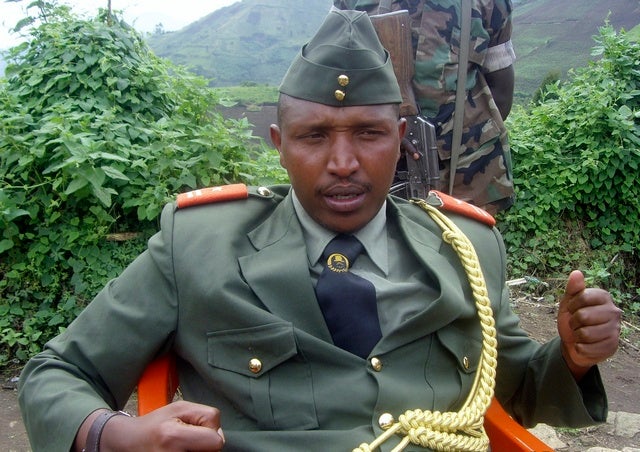
Congolese and international human rights organizations are calling on the United States to pressure the government of Rwanda to support the arrest of Bosco "The Terminator" Ntaganda and not provide him sanctuary. In a letter to Secretary of State Hillary Clinton, the organizations call out the Obama administration and its ally, Rwanda, for inaction that has resulted in the brutalization and displacement of hundreds of thousands of civilians in eastern Congo.
As you will know, Ntaganda is wanted on an arrest warrant from the International Criminal Court (ICC) for the war crime of conscripting and enlisting children under the age of 15 and using them to actively participate in hostilities in 2002-2003 in Ituri district, northeastern Congo. Despite the warrant, and the Congolese government's legal obligation to execute it as a state party to the ICC, Ntaganda was made a general in the Congolese army in 2009 and continues to be implicated in other grave violations of human rights, including unlawful killings, sexual violence, torture, and the recruitment of child soldiers.
The letter, while forceful, glosses over the fact that Rwanda, in a 2009 ugly blood pact with Congo, facilitated the illegal arrest and detention of CNDP rebel general General Laurent Nkunda. This resulted in a bloodless coup, allowing The Terminator Ntaganda to gain control of rebel forces. The result has been disastrous for civilians, who are the collateral damage in this ugly game of diplomacy.

The international press has so far refused to retract accusations leveled against Nkunda for atrocities committed by Ntaganda at Kiwanja and other sites.

Radio Okapi reports
that in the last week, 20,000 people have been forced from their homes and villages after fighting erupted between the regular Congolese army (FARDC) and deserters from Ntaganda's faction. They are seeking shelter in Goma and surrounding areas.

The United Nations High Commission on Refugees (UNHCR) released briefing notes for May 4, 2012 that paint a grim picture for civilians. Since January 300,000 people have fled renewed fighting in the Walikale and Masisi areas. A total of 2 million people are now on the run, including 1.4 million in North and South Kivu Provinces. Many of the spontaneous IDP camps are in areas controlled by rebel militias, which does not bode well for defenseless women and children who will certainly be raped and brutalized.

Margot Wallström, the Secretary-General's Special Representative on Sexual Violence in Conflict, expressed concern that there will be increased sexual violence against civilians by members of the rebel militias. "Once again, a new wave of violence is being perpetrated by actors such as the Mai Mai leader Sheka Ntabo Ntaberi and Gen. Bosco Ntaganda, both of whom have been sanctioned by the United Nations Security Council for various violations including sexual violence crimes," Wallström said.
UNHCR field staff say people are still coming to Goma and its environs from their homes in the Masisi and Walikale areas, but the flow has eased a bit. UNHCR staff have registered 10,300 people at a spontaneous site 25 kilometres from Goma and 9,000 in Mugunga III, one of 31 UNHCR-run settlements for internally displaced people in North Kivu. Hundreds are sleeping in a school and church at the spontaneous site, while about 1,000 people are heading to South Kivu
2012-05-05-20120203food_walikale.jpeg
Walikale villagers displaced in January 2012 (Photo by Paluku Mbusa Omer)

38,000 displaced people remain in the areas of Masisi and Walikale. UNHCR is unable to access these people because of the insecurity. Walikale leaders sent out a cry for help early this year, which went unheeded.

Human rights organizations believe that the political commitment of the U.S. government would pressure the Rwandan government to intervene in a situation Rwanda created in early 2009 when they arrested CNDP General Laurent Nkunda.

The United States is complicitous and culpable in the bloodletting and mayhem. As usual, our government seems curiously disengaged. Or is it? One must consider the little reported fact that a United Nation's investigation implicated President Obama's trade advisor, Kase Lawal, in a gold smuggling scheme with the Terminator Ntaganda. Lawal is also a bundler for the Obama re-election campaign.

The elevation of Ntaganda has been a dirty, dirty deal for the Congolese people. Will a letter to Secretary Clinton have any effect? Rwanda won't sneeze without the approval of the United States. Does Obama care? The UN's Margot Wallström says, "the world is watching." We can only hope that it is.

Thursday, April 26, 2012

Sierra Leone: Landmark Conviction of Liberian Ex-President | Human Rights Watch


Street vendor watches live broadcast of verdict being delivered by United Nations-backed court in the Hague convicting former Liberian president Charles Taylor in Freetown.

(The Hague) – The conviction on April 26, 2012, of Charles Taylor, the former president of Liberia, for serious international crimes during Sierra Leone’s brutal armed conflict provides justice for victims and shows that no one is above the law, Human Rights Watch said today. Taylor was convicted of war crimes and crimes against humanity before the United Nations-backed Special Court for Sierra Leone on charges that stemmed from his support for rebel groups there.

“Powerful leaders like Charles Taylor have for too long lived comfortably above the law,” said Elise Keppler, senior international justice counsel at Human Rights Watch. “Taylor’s conviction sends a message to those in power that they can be held to account for grave crimes.”

FOR THE FULL ARTICLE CLICK HERE: Sierra Leone: Landmark Conviction of Liberian Ex-President | Human Rights Watch

Saturday, April 14, 2012

DR Congo: Arrest Bosco Ntaganda for ICC Trial | Human Rights Watch

Congolese warlord Bosco Ntaganda remains at large. He should also face arrest.
President Suggests He’s Willing to Apprehend General Wanted for War Crimes
(Goma) –President Joseph Kabila of the Democratic Republic of Congo should immediately order the arrest of Gen. Bosco Ntaganda [4] and promptly transfer him to The Hague for a fair trial, Human Rights Watch said today. Ntaganda is wanted by the International Criminal Court (ICC) for war crimes. Human Rights Watch released a video [5] with witness accounts of Ntaganda’s alleged crimes.

In a public statement in eastern Congo [6] on April 11, 2012, Kabila indicated he was considering Ntaganda’s arrest. Kabila’s emergency visit to the region followed renewed insecurity in North and South Kivu after army soldiers loyal to Ntaganda attempted to mutiny. The statement signified an important change in the Congolese government’s policy toward Ntaganda, who was previously touted as needed for the country’s peace process.

“President Kabila has put Ntaganda’s arrest firmly on the agenda, which is a major step forward for justice in Congo,” said Anneke Van Woudenberg [7], senior Africa researcher at Human Rights Watch. “Kabila’s words should promptly result in a lawfully conducted arrest that will ensure Ntaganda goes straight to The Hague and civilians aren’t harmed.”

The ICC [8] issued a sealed arrest warrant for Ntaganda in 2006 on charges of war crimes for recruiting and using child soldiers in active combat in 2002-2003 in the northeastern district of Ituri. At the time he was chief of military operations for the Union of Congolese Patriots (UPC), a Congolese militia group. The arrest warrant was unsealed in April 2008.

Wednesday, March 14, 2012

‘This is hell,’ French war surgeon says of carnage in Syrian city of Homs

A doctor at a makeshift hospital displays a bullet removed from the hand of a young girl wounded during what protesters said was an attack by Syrian President Bashar al-Assad’s forces, at the Khalidiya neighborhood in Homs. (Reuters)
 

French surgeon Jacque Beres who recently returned to Paris from Syria describes the bloodbath he saw there as among the most horrific he has ever witnessed in his 40 years of work in war zones.

Beres spent 12 days in the besieged city of Homs in February after smuggling himself in, setting up a makeshift hospital in a private residence in the battered neighborhood of Baba Amro.

He operated on 89 people, many of whom he says were the elderly, women and children. He was able to save most, but nine died on the operating table and another two within a day. 

“The light was horrible, just a bulb hanging from the ceiling, and the water was scarce,” the 72-year-old French surgeon and co-founder of Doctors without Borders told the Toronto Star. “There was so much dust in the air, and it would go into the open wounds of patients.” 

Beres went to Syria at the behest of France-Syrie Democracy and the Union of Muslim Associations in France. He crossed the border illegally from Lebanon and managed - seemingly as the only Western doctor- to reach Homs.  

“This is hell” said Beres on Tuesday at a meeting of human rights activists in Geneva.  

“It’s mass murder. It’s totally unfair. It’s unjustifiable” 

Monday, March 5, 2012

Syria refugees tell of executions

BBC: Syrians fleeing Homs accuse troops of atrocities

One woman told Paul Wood how two of her brothers were detained, and one was killed
People fleeing the central Syrian city of Homs have told the BBC that security forces are committing atrocities there.

One woman told the BBC's Paul Wood on the outskirts of Homs that soldiers had slit the throat of her 12-year-old son on Friday - a day after rebel fighters withdrew from the Baba Amr district.

She said 35 other men and boys from her area had also been detained and killed.

The government has denied the Red Cross access to Baba Amr for four consecutive days, citing security concerns.

Activists have warned of a humanitarian catastrophe. 

Leaked video shows patients tortured by medical staff in Syrian military hospital

Leaked video shows patients tortured by medical staff in Syrian military hospital

A wounded patient is shackled to his bed in the Homs military hospital. (Photo courtesy of Channel 4 News)

 A worker at the hospital covertly shot the video and leaked it to the British television broadcaster Channel 4 News.

The footage from the Homs military hospital showed wounded patients blindfolded and shackled to their beds with marks of torture on their bodies. Some instruments of torture, including a rubber whip and electrical cable, appear on a table in one of the hospital wards.

Human rights activists and medical professionals told Channel 4 they consider the deliberate infliction of pain on patients by hospital staff as “a gross breach of medical ethics.”

The Syrian government has ordered that all those shot or injured in protests in Homs must be brought to the military hospital for treatment.

The horrific images raise concerns about the fate of the hundreds of wounded civilians from the battered district of Baba Amro, the rebel enclave in Homs that succumbed to month of artillery and tank bombardment.

The hospital worker who released the footage said he attempted several times to stop what he called “the shameful things” that were taking place in the Homs military hospital but was branded a “traitor.” He was interviewed in a safe location. 

Thursday, February 23, 2012

World conference to meet on Syria

Syria faces ultimatum from international conference

Hillary Clinton: "The obstruction of a few countries cannot be allowed to stop the world community from coming to the aid of the Syrian people"
A major world conference is being held in Tunisia to seek a breakthrough in the increasingly bitter Syrian unrest.

The US, Europe and Arab countries plan to challenge President Bashar al-Assad to provide humanitarian access within days to the worst-affected areas.

There is growing pressure on Damascus to give access to civilians trapped by the onslaught on Homs, which has lasted for more than two weeks.

Activists say another 50 or 60 people died across Syria on Thursday.

Russia and China will not attend the Tunisia "Friends of Syria" conference, organised by the Arab League.

The two countries have faced Western and Arab criticism for blocking a UN Security Council resolution that would have backed an Arab League peace plan for Syria.

Around 70 other nations, including the US, UK, France and Turkey are attending.

The conference will agree a declaration on Syria, expected to demand an immediate ceasefire and humanitarian assessment, with the threat of further sanctions if ignored.

 FOR FULL ARTICLE CLICK HERE:World conference to meet on Syria

Wednesday, October 5, 2011

NTC discovers two mass graves containing up to 900 bodies near Tripoli

FROM AL ARABIYA:

NTC discovers two mass graves containing up to 900 bodies near Tripoli

The military unit of Libya’s National Transitional Council has dicovered two mass graves containing as many as 900 bodies. (Photo by Reuters)
Libya’s new rulers have discovered two mass graves containing the bodies of as many as 900 people who had “died not long ago,” reporters on the scene said on Wednesday.

“Witness testimony has allowed us to uncover two mass graves of victims of the old regime,” Tripoli security chief Naji al-Issawi told a news conference in the Libyan capital.


A mass grave in Gargaresh, on the coast some seven kilometers (four miles) from the center of Tripoli, contained the bodies of about 200 people, Issawi said, thought to have died in the battles surrounding the rebel assault that ousted Muammar Qaddafi.

A second grave in Birasta Milad, a rural area 10 kilometers (six miles) from the city center contained an estimated 700, he added.


Journalists at the Gargaresh grave said that bodies seen had not died long ago judging by the lack of decomposition, AFP reported.


A pathologist told journalists at Gargaresh that at least two of the bodies had bullet wounds and around 20 had fractured skulls, reported AFP.

FULL ARTICLE HERE: NTC discovers two mass graves containing up to 900 bodies near Tripoli

Saturday, September 10, 2011

Here Gaddafi's men trapped their prey – then threw in the grenades - Africa, World - The Independent

Here Gaddafi's men trapped their prey – then threw in the grenades

Kim Sengupta discovers evidence of a recent atrocity by the feared Khamis Brigade
Saturday, 10 September 2011
 
Amr Dau Algala was picking through the ashes with a stick when he came across the charred and broken bones. A little later he found the buckle. "Only my brother was wearing a belt in our group. This looks like my brother's," he whispered, looking down at the twisted piece of metal. 
Around 60 men, prisoners of Muammar Gaddafi's regime, died when guards first opened fire and then tossed grenades into the warehouse where they were being held. Among them was Amr and three of his brothers. They ran for their lives amid the flames, noise and confusion and escaped. A fourth, 25-year-old Abdullah, is missing.
"The last time I saw Abdullah was there, sitting in that corner," said Mr Algala, pointing at a blackened corner of the metal box, around 25 feet long and 20 feet wide, into which more than a hundred captives had been crammed. "He is young and looked very scared that morning. When the guards opened fire I started running. I looked back, but there was too much smoke, I could not see my brother. Some people got away after us, we are really hoping Abdullah was one of them, but we don't know." 
Six mounds of reddish brown earth, in a stretch of ground next to the headquarters in Yarmuk of the 32nd Brigade, commanded by Khamis, Colonel Gaddafi's son, marked where the remains of the prisoners had been buried. Decomposed by the heat in the shallow graves most of them have been impossible to identify. 
The revolutionaries in Libya claim that up to 50,000 people have died or disappeared in the hands of the regime's forces since the uprising began in February. Caution is needed about such numbers and the figure may well be too high. But it is also the case that what happened to the Algala brothers is just one of many examples of Gaddafi's forces taking vicious retribution in the dying days of the regime.
(FULL STORY HERE: Here Gaddafi's men trapped their prey – then threw in the grenades - Africa, World - The Independent)

INTERPOL issues Red Notice for arrest of Muammar Gaddafi at request of International Criminal Court


Muammar Gaddafi


Saif Al-Islam Gaddafi


Abdullah Al-Senussi
LYON, France – INTERPOL has issued Red Notices for Libya’s Muammar Gaddafi, his son Saif Al-Islam Gaddafi and former director of military intelligence Abdullah Al-Senussi after the Prosecutor of the International Criminal Court (ICC), Luis Moreno-Ocampo, requested the world police body to issue internationally wanted persons notices against the Libyan nationals for alleged crimes against humanity, including murder and persecution.
The publication of INTERPOL Red Notices for the three men is part of INTERPOL’s collaboration with the Office of the Prosecutor of the ICC to assist cooperating member countries in their efforts to enforce the arrest warrants issued by the ICC.
The Red Notices have been circulated to all of INTERPOL’s 188 member countries and include essential identifying and judicial information.
In addition to the publication of the Red Notices, INTERPOL is offering the full support of its Command and Coordination Centre and asking its member countries to take all measures consistent with their national laws to help the ICC locate and apprehend Gaddafi.
"Prosecutor Moreno-Ocampo’s request for INTERPOL Red Notices will significantly restrict the ability of all three men to cross international borders and is a powerful tool to help in their location and arrest,” said INTERPOL Secretary General Ronald K. Noble.
"As far as INTERPOL's General Secretariat headquarters is concerned, Muammar Gaddafi is a fugitive whose country of nationality and the International Criminal Court want arrested and held accountable for the serious criminal charges that have been brought against him.
"INTERPOL will cooperate with and assist the ICC and Libyan authorities represented by the Interim Transitional National Council of Libya to apprehend Muammar Gaddafi," added Secretary General Noble.
The publication of INTERPOL Red Notices for Gaddafi and the other two Libyan nationals will see INTERPOL's specialized Fugitive Investigation Support unit at its General Secretariat closely liaise with its National Central Bureaus worldwide to pool and update all relevant intelligence to ensure that they are located, arrested and surrendered to the ICC.
“Arresting Gaddafi is a matter of time. By requesting an INTERPOL Red Notice the ICC ensures that the arrest warrant for Gaddafi is in the hands of law enforcement around the world,” said Prosecutor Moreno-Ocampo.
Since INTERPOL and the Office of the Prosecutor of the ICC signed a cooperation agreement in 2004, INTERPOL has worked closely with the ICC. In addition to the Red Notices now issued for these three Libyan nationals, there are currently seven valid Red Notices issued at the request of the ICC.
Since March 2011, through the publication of Orange Notice global alerts against Colonel Gaddafi and other Libyan nationals, including members of his family and close associates, INTERPOL has been warning member states of the danger posed by the movement of these individuals and their assets following the sanctions established by United Nations Security Council resolutions 1970 and 1973 (2011).

Secret Intelligence Documents Discovered in Libya | Human Rights Watch

Secret Intelligence Documents Discovered in Libya | Human Rights Watch


Files Show Intimate Relationship Between CIA, MI6, and Libya
September 8, 2011


Among the files were documents confirming that both the US Central Intelligence Agency (CIA) and the United Kingdom’s MI6 sent terrorism suspects to Libya for detention – despite Libya’s notorious record for torturing prisoners.

Human Rights Watch discovered in Tripoli tens of thousands of archived documents containing evidence of crimes – such as the US and UK governments’ complicity in torture – committed during Col. Muammar Gaddafi’s rule

The documents were found in the office of Musa Kusa, Gaddafi’s former intelligence chief. We viewed several hundred documents and photographed about 300, but didn’t remove any. We have been working with Libya’s National Transitional Council (NTC) to secure the building, keeping the documents safe so they can be used as evidence in court. We continue to scour Tripoli for more documents, trying to ensure that archives are secure.

Among the files were documents confirming that both the US Central Intelligence Agency (CIA) and the United Kingdom’s MI6 sent terrorism suspects to Libya for detention – despite Libya’s notorious record for torturing prisoners.

The CIA communications that we saw were drafted while George W. Bush was president and included information like flight schedules and lists of questions to be asked of suspects. They also established that the CIA sent agents to interrogate suspects in Libyan custody.

This confirms Human Rights Watch’s earlier findings of US and UK complicity in the torture of suspects in foreign countries, published in 2004. The US says it has not transferred any detainees to Libya since 2007.

CIA renditions

The files we reviewed included details of at least four renditions, including that of Abdul Hakim Belhaj, former leader of the Libyan Islamic Fighting Group and now rebel military commander in Tripoli. The group sought to overthrow Gaddafi in the 1990s and played a major role in the current revolt.

During a mission to Libya in 2009, Human Rights Watch interviewed Belhaj. At the time, he was in Abu Salim prison, where Gaddafi locked away political prisoners and the site of a notorious 1996 prison massacre. It was also where Libya detained many of the prisoners transferred by the CIA. Belhaj said that he and his pregnant wife were detained in Malaysia in 2004, then rendered to Libya. He said CIA agents interrogated him about alleged ties to al-Qaeda – ties he denied – and beat and hung him by his limbs on a wall.

Diplomatic assurances and the Gibson Inquiry

An analysis of the documents viewed by Human Rights Watch reinforces the need to end the policy of relying upon “diplomatic assurances” by governments that torture that they will treat prisoners transferred to them humanely. At least two of the documents – one involving Belhaj – show that the US sought assurances that Libya would respect the rights of rendered suspects. But it is inconceivable, given the Gaddafi regime’s record of torture – acknowledged by the State Department – that the US government took these assurances seriously.
Creative Commons License
This work is licensed under a Creative Commons Attribution-NonCommercial-ShareAlike 3.0 Unported License.